Climate Change Affecting the Ecosystem of Hunza and Gilgit-Baltistan
Climate Change Affecting the Ecosystem of Hunza and Gilgit-Baltistan
Climate change is rapidly transforming the fragile ecosystem of Hunza and the wider Gilgit-Baltistan region. Nestled in the high mountains of the Karakoram and Himalayas, this area depends heavily on glaciers, seasonal snowfall, and stable weather patterns to sustain its rivers, agriculture, wildlife, and local communities. Rising temperatures, unpredictable rainfall, and accelerated glacier melting are disrupting this natural balance. As a result, the region is experiencing increased risks of floods, landslides, water scarcity, and loss of biodiversity. These environmental changes not only threaten the unique mountain ecosystem but also endanger traditional livelihoods and the long-term sustainability of life in Hunza and Gilgit-Baltistan.
Table Of Contents
- 1. Introduction – Climate Change in Hunza and Gilgit-Baltistan
- 2. Main Causes of Climate Change in Hunza and Gilgit-Baltistan
- 3. Impact of Climate Change on the Ecosystem
- 4. Glacier Melting and Water Resources
- 5. Effects on Biodiversity and Wildlife
- 6. Impact on Local Communities and Livelihoods
- 7. Climate Change Mitigation and Adaptation Strategies
- 8. Conclusion
- 9. FAQs – Climate Change in Hunza and Gilgit-Baltistan
1. Introduction – Climate Change in Hunza and Gilgit-Baltistan
Hunza and Gilgit-Baltistan are home to some of the world’s most fragile and unique mountain ecosystems. Surrounded by the Karakoram, Himalaya, and Hindu Kush ranges, this region relies heavily on glaciers, snow-fed rivers, and stable seasonal cycles. However, climate change is increasingly disrupting this delicate balance. Rising temperatures, erratic weather patterns, and reduced snowfall are accelerating glacier melt and altering water availability across the region. These environmental changes are already visible through frequent floods, landslides, glacial lake outburst floods (GLOFs), and prolonged dry periods. Agriculture, biodiversity, and traditional livelihoods are under growing pressure as ecosystems struggle to adapt. Climate change in Hunza and Gilgit-Baltistan is not just an environmental issue—it is a serious threat to food security, water resources, and the cultural and economic stability of local communities. Addressing these challenges is essential to protect the region’s ecosystem and ensure a sustainable future for generations to come..
- Hunza and Gilgit-Baltistan are highly sensitive mountain regions dependent on glaciers and snowfall.
- Rising temperatures are accelerating glacier melt and disrupting natural water cycles.
- Unpredictable weather patterns are increasing floods, landslides, and drought risks.
- Climate change is threatening local agriculture, wildlife, and biodiversity.
- Traditional livelihoods and community resilience are under growing environmental pressure.
2. Main Causes of Climate Change in Hunza and Gilgit-Baltistan
Climate change in Hunza and Gilgit-Baltistan is driven by a combination of global and local factors. Although the region contributes very little to global greenhouse gas emissions, it is among the most vulnerable to climate-related changes due to its high-altitude environment and fragile ecosystem. The following factors are the main causes behind the changing climate patterns in the region
- Global Warming: Rising global temperatures are causing rapid glacier melt and reduced snow cover in high mountain areas.
- Greenhouse Gas Emissions: Emissions from industrial activities worldwide trap heat in the atmosphere, directly affecting regional climate systems.
- Deforestation: Cutting trees for fuel and construction reduces natural carbon absorption and increases local temperatures.
- Population Growth and Urban Expansion: Increased human activity puts pressure on natural resources and disrupts ecosystems.
- Unsustainable Farming Practices: Overgrazing and improper land use degrade soil and reduce its ability to adapt to climate stress.
- Black Carbon Pollution: Smoke from vehicles, generators, and burning fuels settles on glaciers, accelerating ice melt.
3. Impact of Climate Change on the Ecosystem
Climate change is causing serious and long-lasting damage to the ecosystem of Hunza and Gilgit-Baltistan. The region’s natural balance—shaped over centuries by cold temperatures, glaciers, and predictable seasons—is now under threat. Changes in climate are affecting land, water, plants, animals, and human life simultaneously.
- Glacier Retreat: Rapid melting of glaciers is reducing long-term water storage and increasing the risk of glacial lake outburst floods (GLOFs).
- Water Scarcity: Irregular snowfall and faster ice melt are disrupting river flow, leading to water shortages during dry seasons.
- Loss of Biodiversity: Native plant and animal species are struggling to survive as habitats shrink and temperatures rise.
- Soil Degradation: Increased erosion, landslides, and floods are damaging fertile land and reducing agricultural productivity.
- Forest Decline: Changing weather patterns and human pressure are weakening forest ecosystems and reducing tree cover.
- Increased Natural Disasters: Floods, landslides, and avalanches are becoming more frequent and severe, threatening both ecosystems and communities.
4. Glacier Melting and Water Resources
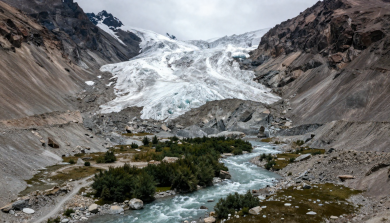
Glaciers are the primary source of freshwater in Hunza and Gilgit-Baltistan, feeding rivers, streams, and irrigation channels that sustain agriculture and daily life. Climate change is accelerating glacier melting at an alarming rate, disturbing the natural water cycle of the region. While increased melting may cause short-term flooding, it poses severe long-term risks to water availability.
- Accelerated Glacier Melt: Rising temperatures are causing glaciers to melt faster than they can naturally regenerate.
- Glacial Lake Outburst Floods (GLOFs): Melting ice forms unstable glacial lakes that can burst suddenly, leading to destructive floods.
- Seasonal Water Imbalance: Excess water in summer and shortages in winter are disrupting agriculture and drinking water supply.
- Threat to Irrigation Systems: Traditional water channels (kuls) depend on steady glacier melt, which is becoming increasingly unreliable.
- Long-Term Water Scarcity: Continued glacier loss may reduce river flows permanently, affecting food security and hydropower potential.
- Impact on Downstream Areas: Changes in glacier-fed rivers affect not only Hunza but also downstream regions dependent on these water sources.
5. Effects on Biodiversity and Wildlife
Climate change is putting immense pressure on the rich biodiversity and fragile wildlife habitats of Hunza and Gilgit-Baltistan. This mountainous region supports a wide range of plant species and rare animals adapted to cold, high-altitude conditions. As temperatures rise and ecosystems shift, many species are struggling to survive.
- Habitat Loss: Melting glaciers, shrinking forests, and changing vegetation zones are reducing natural habitats for wildlife.
- Threat to Endangered Species: Species such as the snow leopard, ibex, and Marco Polo sheep face increased risks due to habitat disturbance and food scarcity.
- Changes in Plant Diversity: Native alpine plants are declining as invasive species move into warmer areas.
- Disrupted Food Chains: Climate-induced changes in vegetation and prey availability are affecting predator–prey balance.
- Altered Migration Patterns: Birds and animals are changing their migration and breeding cycles in response to temperature shifts.
- Icncreased Human–Wildlife Conflict: Wildlife moving closer to settlements in search of food and water leads to more conflicts with local communities.
6. Impact on Local Communities and Livelihoods
Climate change is directly affecting the daily lives and traditional livelihoods of communities in Hunza and Gilgit-Baltistan. Most people in this region depend on agriculture, livestock, and natural water resources. As environmental conditions become more unpredictable, local communities face growing economic, social, and food security challenges.- Agricultural Losses: Irregular rainfall, shorter growing seasons, and extreme weather events are reducing crop yields.
- Water Shortages: Unstable glacier melt and reduced snowfall are limiting access to clean drinking and irrigation water.
- Damage to Infrastructure: Floods and landslides are destroying homes, roads, bridges, and irrigation channels.
- Threats to Livestock: Loss of grazing land and harsh weather conditions are affecting animal health and productivity.
- Economic Instability: Tourism, a key source of income, is impacted by natural disasters and environmental degradation.
- Forced Migration: Some families are compelled to relocate due to repeated disasters and loss of livelihood resources.
7. Climate Change Mitigation and Adaptation Strategies
To protect the fragile ecosystem of Hunza and Gilgit-Baltistan, both mitigation and adaptation strategies are essential. While mitigation focuses on reducing the causes of climate change, adaptation helps communities adjust to its unavoidable impacts. Local action, combined with policy support and community awareness, can significantly reduce climate risks.
- Afforestation and Reforestation: Planting native trees helps absorb carbon, prevent soil erosion, and restore natural habitats.
- Sustainable Water Management: Improving irrigation systems, protecting glaciers, and promoting water conservation ensure long-term water security.
- Climate-Resilient Agriculture: Introducing climate-smart farming techniques and drought-resistant crops supports food security.
- Disaster Risk Reduction: Early warning systems for floods and landslides can save lives and reduce damage.
- Renewable Energy Use: Promoting solar, hydropower, and clean energy reduces dependence on fossil fuels.
- Community Awareness and Education: Educating local communities about climate risks encourages sustainable practices.
- Government and Policy Support: Strong environmental policies and investment in climate adaptation projects are crucial.
8. Conclusion
Climate change poses a serious and growing threat to the fragile ecosystem of Hunza and Gilgit-Baltistan. Accelerated glacier melting, water scarcity, loss of biodiversity, and frequent natural disasters are disrupting both the natural environment and the livelihoods of local communities. Although the region contributes minimally to global emissions, it faces some of the most severe climate impacts due to its high-altitude geography and dependence on natural resources. Protecting this unique ecosystem requires urgent action through sustainable resource management, climate-resilient development, community awareness, and strong environmental policies. By combining local knowledge with modern adaptation strategies, Hunza and Gilgit-Baltistan can build resilience against climate change and safeguard their natural heritage for future generations.
9. FAQs – Climate Change in Hunza and Gilgit-Baltistan
1. Why is Hunza and Gilgit-Baltistan highly vulnerable to climate change?
The region depends heavily on glaciers and snowfall, making it extremely sensitive to rising temperatures and changing weather patterns.
2. How does glacier melting affect local communities?
Rapid glacier melting causes floods in the short term and water shortages in the long term, impacting agriculture, drinking water, and livelihoods.
3. What are Glacial Lake Outburst Floods (GLOFs)?
GLOFs occur when melting glaciers form unstable lakes that suddenly burst, causing severe flooding and infrastructure damage.
4. How is climate change affecting wildlife in Gilgit-Baltistan?
Rising temperatures and habitat loss are threatening endangered species and increasing human–wildlife conflicts.
5. What can be done to reduce climate change impacts in the region?
Afforestation, sustainable water management, renewable energy use, and community awareness can help reduce climate risks.
-
 Cross shoulder leather bag, hand stitched embroidery, bag, handbag, charcoalPKR 3,500.00 FREE SHIPPING IN PAKISTAN
 -
 Pure Traditional Cold Pressed Apricot Oil (ایپریکوٹ آئل)PKR 1,200.00 FREE SHIPPING IN PAKISTAN
 -
 Cold Pressed Walnut Oil 250ml – 100% Pure & Natural Refined Seed OilPKR 1,400.00 FREE SHIPPING IN PAKISTAN
 -
 Sweet Almond Oil 250ml – 100% Pure Cold Pressed (میٹھا بادام کا تیل)PKR 1,600.00 FREE SHIPPING IN PAKISTAN
 -
 Sea Buckthorn Oil – 100% Pure & Natural | Benefits for Skin & Hair (سی بکتھورن کا تیل)PKR 1,800.00 FREE SHIPPING IN PAKISTAN